Rainbow After Rain: Crafting a Lasting Impression
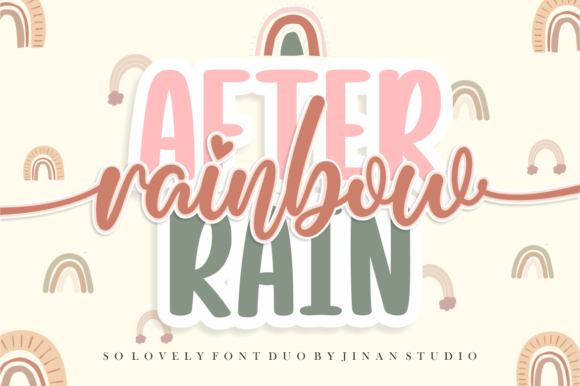
When it comes to typography, the difference between a design that feels "finished" and one that feels "crafted" often comes down to the details. There is a specific emotional weight that a handwritten font carries—it feels personal, organic, and human. However, pairing that raw emotion with structure is where many designs struggle. This is precisely the challenge that the Rainbow After Rain typeface solves. It is not just a single font; it is a stylistic duo designed to bring harmony to your projects. By combining the fluid elegance of a script with the grounding stability of a sans serif, it offers a complete design system right out of the box.
The Anatomy of the Duo: More Than Just a Handwritten Font
At first glance, Rainbow After Rain presents itself as a highly expressive script font. The letterforms are crafted with a delicate, flowing rhythm that mimics natural handwriting. You will notice the high contrast between thick and thin strokes, which gives the typography a sense of movement and energy. It avoids the messy, illegible look of many modern display fonts while retaining that coveted "imperfect" charm. The swashes are generous and sweeping, making it an ideal choice for headlines where you want to make an immediate emotional connection.
What sets this apart from other premium font packages is the inclusion of the complementary sans serif font. This is not an afterthought; it is designed specifically to support the script. The sans-serif component features clean lines and a modern aesthetic that balances the ornate nature of the script. This pairing is crucial in modern typography. If you use the script for your main headline and the sans serif for your subheadings or body copy, you create a natural visual hierarchy. The eye is drawn to the beauty of the script, and then effortlessly flows into the legibility of the sans serif text. This duality makes the Rainbow After Rain duo a versatile typeface system rather than just a decorative font.
Real-World Applications: From Brand Identity to Packaging Design
As a designer or business owner, your goal is to find design assets that offer versatility. Rainbow After Rain excels in scenarios where you need to project a romantic, soft, or artisanal vibe without sacrificing professionalism.
Consider logo design. A logo needs to be memorable, but it also needs to be scalable. Using the script variation of this font for a beauty brand, a wedding photographer, or a boutique bakery immediately establishes a high-end, personalized feel. Because the letterforms are distinct, the logo remains recognizable even at smaller sizes, provided you manage the spacing correctly.
In packaging design, the font shines brightest. Imagine a label for a scented candle or a luxury chocolate box. The script font draws the customer in with an emotional appeal, while the sans serif font provides the necessary product information—ingredients, weight, instructions—with clarity. This combination ensures that the packaging is not only beautiful but functional. It prevents the common pitfall of "pretty but unreadable" packaging that frustrates customers.
For editorial design, such as magazine covers or blog headers, the font provides a break from the rigid geometric fonts that dominate digital media. It introduces a human element that can soften a layout. In web design, using the script for pull quotes or hero section headers can break up the monotony of standard body text, increasing user engagement and time on page.
Technical Excellence: The PUA Encoding Advantage
One of the most common frustrations with decorative fonts is software compatibility. You purchase a beautiful font, only to find that the special swashes and ligatures are locked away because your software doesn't support OpenType features. Rainbow After Rain addresses this by being fully PUA (Private Use Areas) encoded.
This technical feature is a game-changer for content creators and hobbyists. Whether you are working in Adobe Illustrator, Photoshop, or a simple drag-and-drop platform like Canva, you have full access to every glyph. This means you can easily access those long, elegant tails on the letters or unique stylistic alternates that give the font its character. You do not need to be a typography expert to use the advanced features; they are accessible to everyone. This ease of use makes it a practical choice for small business owners who are creating their own social media graphics and marketing materials.
Practical Guidance for Implementation
Integrating a creative font like Rainbow After Rain into your workflow requires a bit of strategy to ensure you get the best results. Here are some practical observations and recommendations:
- Evaluating Project Fit: While this is a versatile commercial font, it is best suited for projects aiming for an emotional connection. It works wonders for wedding invitations, greeting cards, and lifestyle branding. It is less suited for technical manuals, corporate reports, or UI/UX design where cold, hard data readability is the priority.
- Readability Considerations: The script component is a display font. This means it is designed for large sizes. Do not use the script version for long paragraphs or small body text on a website; it will strain the reader's eyes. Instead, use the accompanying sans serif for body copy. The sans serif has been optimized for legibility at smaller sizes, ensuring your message gets across clearly.
- Testing Font Pairings: While the built-in duo is a perfect match, you can also pair the script component with other fonts. It sits well alongside a sturdy serif font for a classic, editorial look. If you want a more modern feel, pair it with a geometric sans serif. However, always test the contrast—you want the script to stand out, not clash.
- Reviewing Styles: Take time to explore the full character map. Often, there are different versions of lowercase letters that can change the flow of a word. For example, you might find that the standard "t" is too short for a specific word, but there is an alternate with a longer crossbar available in the glyphs panel.
Building Brand Consistency
For entrepreneurs and marketers, brand consistency is the bedrock of trust. When you use a font pairing system like Rainbow After Rain, you are essentially buying a pre-made style guide for your typography. By using the script for all your "hero" moments—headers, logos, and quotes—and the sans serif for all your "utility" moments—prices, descriptions, and contact info—you create a cohesive visual language.
This consistency helps with brand recognition. Your audience will start to associate that specific elegant script with your brand's personality. It signals that you care about aesthetics and quality. In a crowded digital marketplace, these subtle visual cues are what differentiate a hobbyist from a professional. Whether you are designing a new menu for a café or setting up a landing page for a marketing campaign, the Rainbow After Rain duo provides the tools to make your work look polished, romantic, and undeniably professional.