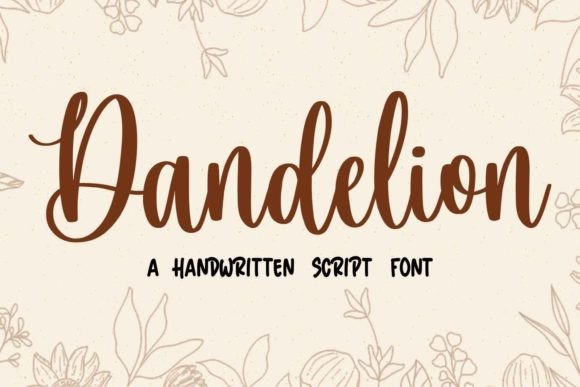
Dandelion Font: A Script Handwritten Typeface for Authentic Designs
In a digital world saturated with clean, geometric sans serifs, there's a growing hunger for authenticity and human touch. Designers and creators are constantly searching for tools that bridge the gap between polished professionalism and genuine warmth. Enter Dandelion, a script handwritten font that feels less like a digital file and more like a personal note from a friend. It’s not just another typeface; it’s a design asset that carries personality, emotion, and a story within its flowing lines.
At its core, Dandelion is a premium font designed to emulate the organic, slightly imperfect beauty of natural handwriting. Its visual characteristics are defined by elegant, connecting strokes and subtle variations in line weight, mimicking the pressure of a pen on paper. This gives it a distinct personality that is both approachable and sophisticated. Unlike rigid, formal scripts, Dandelion maintains a sense of spontaneity and joy, making it a perfect choice for projects that need to feel handmade, thoughtful, and full of character. It’s the visual equivalent of a warm smile.
Where Dandelion Truly Shines: Practical Applications
The true value of a creative font like Dandelion lies in its versatility. It’s a workhorse for projects where emotional connection is key. For craft and sewing projects, it’s a natural fit. Imagine it on custom embroidery patterns, quilt labels, or the branding for a handmade Etsy shop. Its flowing curves complement the texture of fabric and thread, creating a cohesive and artisanal look. For scrapbooking, it adds a personal journaling feel to titles and captions, making memories feel even more intimate.
Beyond crafts, Dandelion excels in brand identity and logo design. For businesses in the wedding industry, boutique retail, artisanal food, or wellness, this font can become the cornerstone of a brand’s voice. It communicates care, individuality, and quality—values that resonate deeply with consumers seeking alternatives to mass-produced goods. Used in packaging design, it can transform a simple product into a gift-worthy item, telling a story of craftsmanship before the customer even tries the product.
In the digital realm, its applications are equally powerful. As a display font, it’s brilliant for social media graphics, creating eye-catching quotes, story highlights, and promotional posts that stop the scroll. For editorial design, it can add flair to magazine headlines or blog post titles. It’s also a standout choice for wedding invitations, stationery, and digital event branding, setting a tone of elegance and personal celebration from the first glance.
Making Dandelion Work: A Designer's Practical Guide
Integrating a script font like Dandelion into your projects requires thoughtful execution to maximize its impact and maintain professionalism. Here’s how to approach it effectively.
Evaluating Project Fit: First, assess the project’s tone. Dandelion is ideal for conveying warmth, creativity, and a personal touch. It might not be the best choice for a corporate financial report or a technical manual, but it’s perfect for a bakery’s menu, a yoga studio’s brochure, or a children’s book title. Consider your audience. For adults aged 20–50 who value authenticity and craftsmanship, this font speaks their language.
Font Pairing is Crucial: A common mistake with handwritten fonts is using them for large blocks of body text, which can hurt readability. The smartest way to use Dandelion is as an accent. Pair it with a clean, highly legible sans serif font or a simple serif font for body copy. For example, use Dandelion for a headline or a pull quote, and pair it with a font like Open Sans or Lora for paragraphs. This creates a clear visual hierarchy, letting Dandelion make its statement without sacrificing readability.
Leveraging Its Full Character Set: One of the standout features of Dandelion is that it is PUA encoded. This is a technical detail with huge practical benefits. It means all the extra glyphs, swashes, and ligatures are easily accessible in any design software, even if it doesn’t have advanced OpenType features. You can use these extras to add flourishes to capital letters, create unique connections between characters, or add decorative endings to words, allowing for truly custom and dynamic typography. Don’t just type—explore the character map to unlock its full creative potential.
Readability and Licensing: Always test your designs at the intended size. A beautiful script can become illegible if scaled down too small or placed over a busy background. Ensure there’s enough contrast and space. Finally, for any commercial project—whether it’s a client logo, a product you sell, or marketing materials—confirm that you have the appropriate commercial font license. This protects you legally and supports the type designers who create these invaluable assets.
Dandelion is more than just a download; it’s a gateway to adding genuine human emotion to your work. It’s a tool for marketers who want to build relatable brands, for crafters who want to elevate their projects, and for designers seeking to inject personality into their layouts. By understanding its strengths and applying it with intention, you can transform ordinary designs into memorable experiences that resonate deeply with your audience. It’s the subtle, sweet touch that makes all the difference.